
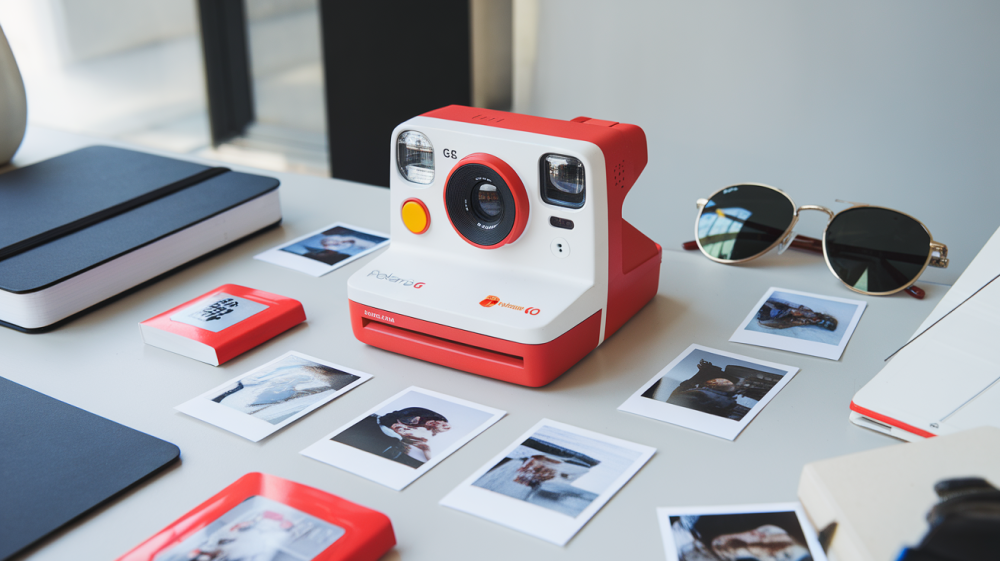

The Polaroid Go is a fun-sized instant camera designed to bring back the charm of old-school photography with a modern twist.
With its compact design and retro feel, it’s aimed at anyone who wants to capture life’s moments on the go.
But is it more than just a cute gadget?
In this review, I’ll explore everything you need to know, from design and usability to image quality and value, so you can decide if it’s the right camera for you.
What Is a Polaroid Go?
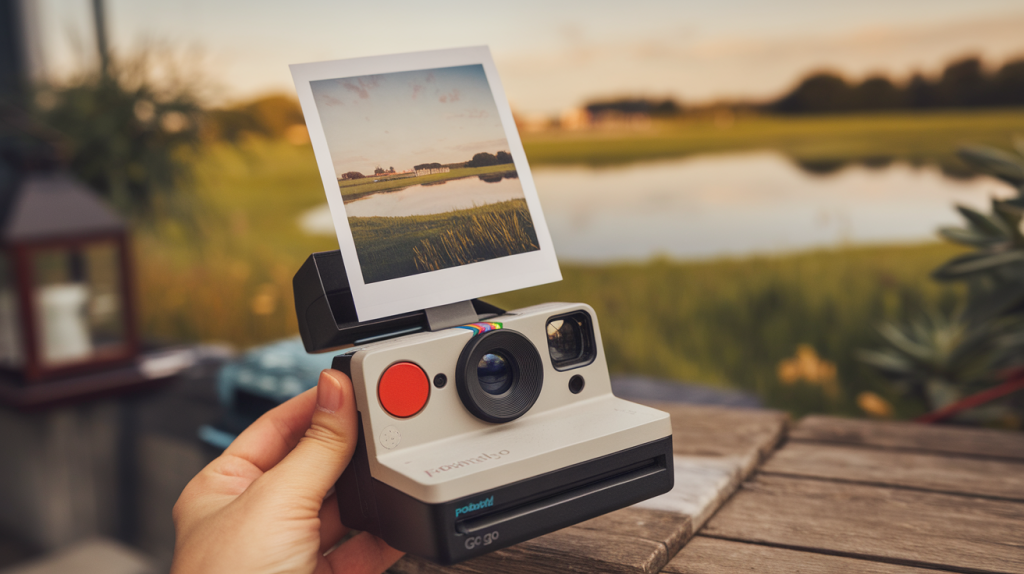
The Polaroid Go is a compact instant camera designed to bring the charm of classic Polaroid photography into a smaller, travel-friendly format.
It’s the smallest camera Polaroid has ever made, built for people who want quick, tangible prints with minimal fuss.
With its rounded design, built-in flash, and signature white-bordered film, the Go captures the nostalgic feel of vintage instant cameras while adding modern features like double exposure and a self-timer.
It’s easy to use, stylish to carry, and perfect for casual moments, journaling, or creative snapshots on the go.
Design and Build Quality
The Polaroid Go is eye-catching right out of the box.
It’s small, light, and playful, almost like a toy, but with a purpose.
How Small Is the Polaroid Go?
This is Polaroid’s tiniest camera ever.
Measuring just 4.1 x 3.3 x 2.4 inches and weighing around 0.53 pounds (240 grams), the Go fits easily in one hand.
It’s much smaller than the classic Polaroid cameras of the past and even tinier than the Polaroid Now.
Its size makes it super portable, perfect for travel, festivals, or slipping into a bag without a second thought.
If you’ve ever thought instant cameras were too bulky, this one changes the game.
Build Materials and Aesthetics
The camera is made from a durable matte plastic that feels sturdy despite its size.
The rounded edges and classic Polaroid logo give it a fun, nostalgic look.
Currently, it comes in white, black, red, and blue, allowing you to choose a version that matches your style.
Although the build is solid, the plastic does give off a slightly toy-like vibe. Still, it holds up well for casual use, and the simple aesthetic is undeniably charming.
Ease of Use
Using the Polaroid Go is as easy as pointing, clicking, and waiting for the print to develop.
That’s part of its appeal; it strips photography down to the basics.
Setup Process
Getting started is simple.
Open the back, load a film cartridge (sold separately), and power it on using the button on the side.
The camera turns on quickly and is ready to shoot in seconds.
A small LED display shows the number of remaining shots.
There’s no screen or menu to deal with, load the film, and start snapping.
Shooting Experience
The viewfinder is located in the top corner and takes a little getting used to since it’s not digital.
You’ll need to align your shot manually, which adds a fun, imperfect element to the experience.
The shutter button is large and clicky. It’s responsive and easy to press, even one-handed.
Holding the button also enables the double exposure mode, which lets you layer two images for a creative look.
Photo Quality
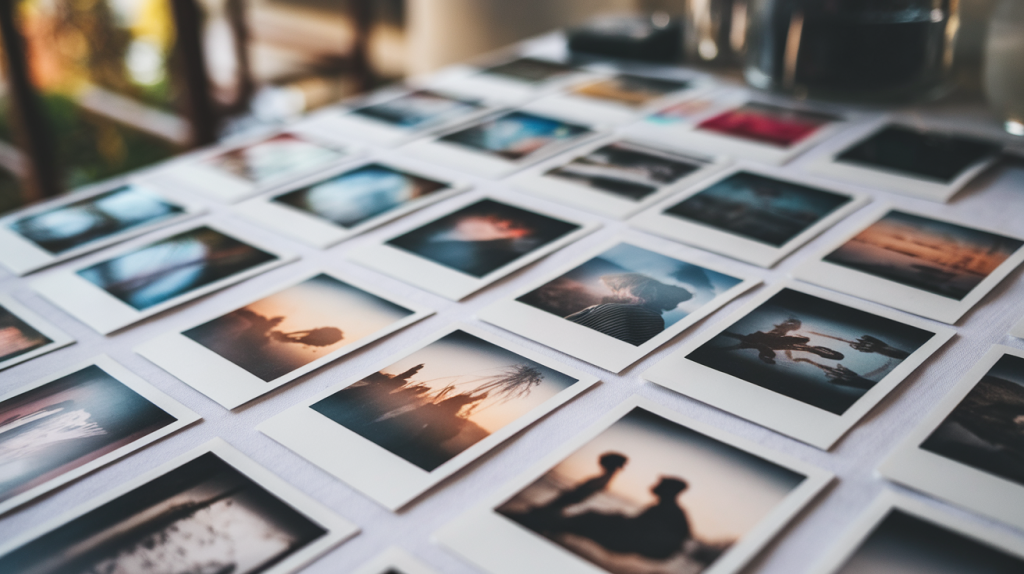
Polaroid Go images are more about style and vibe than sharpness or accuracy.
The imperfections are part of the appeal.
Film Type and Size
The Go uses its own unique film type, Polaroid Go film.
It’s smaller than the classic Polaroid film and produces prints that are 2.6 x 2.1 inches, with an actual image area of about 1.85 x 1.8 inches.
These mini prints have a white border and a square image in the center.
The small size makes them great for scrapbooking, journaling, or hanging on a string of clips.
Print Quality and Look
Photos from the Polaroid Go have a vintage, dreamy look with soft focus and slight color shifts.
They aren’t high-res, but that’s not the point.
Colors are warm and often a little desaturated.
Bright outdoor light yields the best results, while indoor or low-light shots can be unpredictable.
Expect a slight blur and some grain, hallmarks of true Polaroid charm.
Features and Performance
The Polaroid Go may be small, but it includes just enough features to make shooting creative and fun without overwhelming you with settings.
Built-In Flash and Exposure Settings
The flash fires automatically in most situations and can’t be disabled.
This is helpful in dim settings, but can sometimes overexpose close-up shots.
There’s no exposure control, which keeps things simple.
However, the automatic exposure setting adjusts surprisingly well to different lighting conditions in daylight.
The camera also features a self-timer (press the button twice), which is useful for group shots or selfies when you don’t want your arm in the frame.
Battery Life
The camera comes with a built-in lithium-ion battery that charges via a USB port.
It lasts for about 15 film packs (120 shots) on a single charge, which is more than enough for a full day of snapping.
Charging takes around 2 hours.
The LED lights show battery and film count status so that you won’t be caught off guard.
Portability and Everyday Use
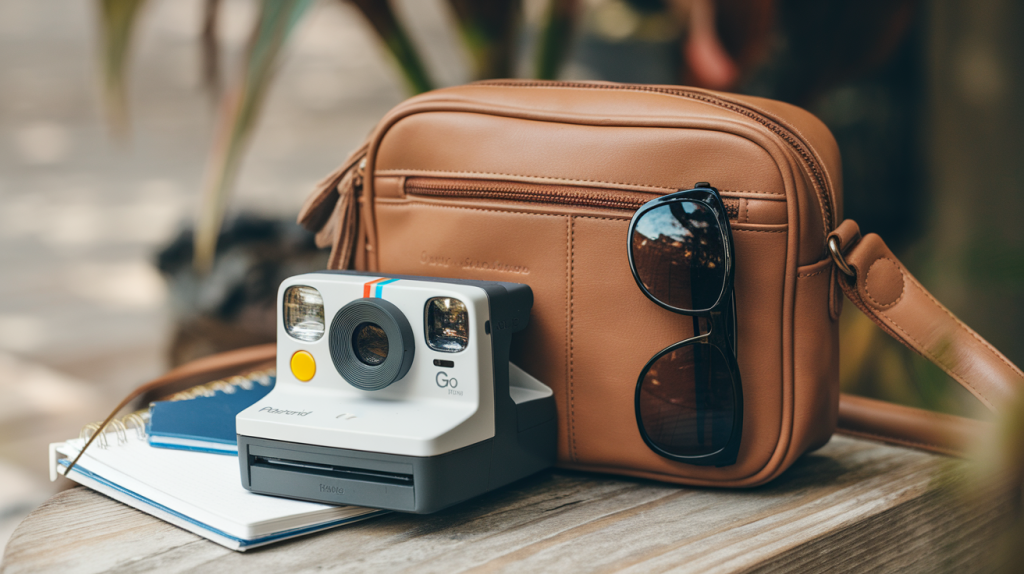
The Polaroid Go was clearly built for on-the-go use.
It’s compact, travel-friendly, and easy to handle, even for kids or first-time instant camera users.
Best Use Cases
It shines at casual events like birthday parties, picnics, road trips, and journaling sessions.
It’s not a serious photography tool, but rather something that adds fun to moments worth remembering.
The small prints make it ideal for creative projects like bullet journals, fridge collages, or travel albums.
You can even hand them out as souvenirs to friends or use them as photo tags for gifts.
Is It Really Pocket-Sized?
It’s more “small-bag” than “pocket-sized.”
While it won’t fit in most jeans pockets, it slides easily into a crossbody, purse, or small backpack.
It’s lightweight enough that you won’t notice carrying it around all day.
Polaroid also offers cute accessories like a camera clip, strap, and miniature photo albums sized just for Go prints, enhancing the on-the-go experience.
Price and Value
Let’s talk numbers, because as fun as the Polaroid Go is, it does come with ongoing costs.
Cost of Camera vs. Film
The camera itself retails for around $80–$100 USD.
That’s reasonable for an instant camera in today’s market, especially considering the build quality and included features.
Where things can add up is in the film.
Polaroid Go film typically costs about $19.99 for a pack of 16 exposures, which comes out to roughly $1.25 per print.
For occasional use, that’s fine, but frequent shooters might feel the pinch.
Is It Worth the Price?
If you’re looking for a compact, easy-to-use instant camera with a fun aesthetic and creative options, the Polaroid Go offers great value.
It’s not the cheapest on the market, but it offers something unique: the Polaroid legacy in a tiny frame.
Compared to similar options like the Fujifilm Instax Mini, the Polaroid Go is smaller and more stylish, though it produces slightly less sharp photos.
What you’re paying for here is the experience, the design, and the nostalgic vibe.
Pros and Cons Summary
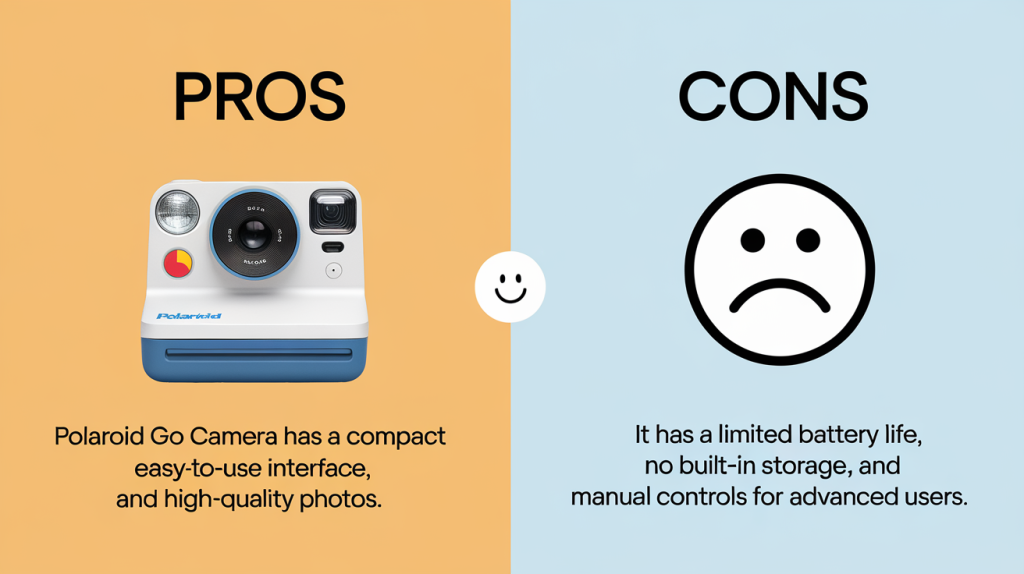
Before we wrap up, here’s a quick look at what the Polaroid Go gets right and where it could improve.
What I Loved
- Ultra-compact and lightweight design
- Easy to use, even for beginners
- Fun features like double exposure and self-timer
- Classic Polaroid aesthetic in print style and camera design
What Could Be Better
- Film can be expensive over time
- No way to turn off the flash
- Limited manual controls
- Small prints may not suit everyone
Final Verdict: Should You Buy the Polaroid Go?
The Polaroid Go is a camera that doesn’t take itself too seriously, and that’s exactly the point.
It’s designed for people who want quick, tangible memories in their hands without fussing over settings.
If you love journaling, traveling light, or collecting mini photo keepsakes, the Polaroid Go could be your new favorite companion.
It’s charming, easy to carry, and fun to use, even if the photo quality isn’t perfect.
For casual users, creatives, and fans of retro flair, the Polaroid Go delivers a joyful experience wrapped in a tiny package.


Leave a Reply